
For a standard paver patio, you need a 1-inch bedding sand layer across the entire area. To find how many bags to buy, multiply your patio's length by its width (in feet) to get square footage, divide by 12 to convert that 1-inch depth into a cubic foot volume, then divide by 0.5 since a 50 lb bag of sand covers about 0.5 cubic feet. Add 10-15% extra for waste and you have your number. A 10x12 ft patio, for example, needs roughly 24-28 bags of sand.
How to Calculate Sand Needed for a Patio

Clara Farrell
13 Jun 2026
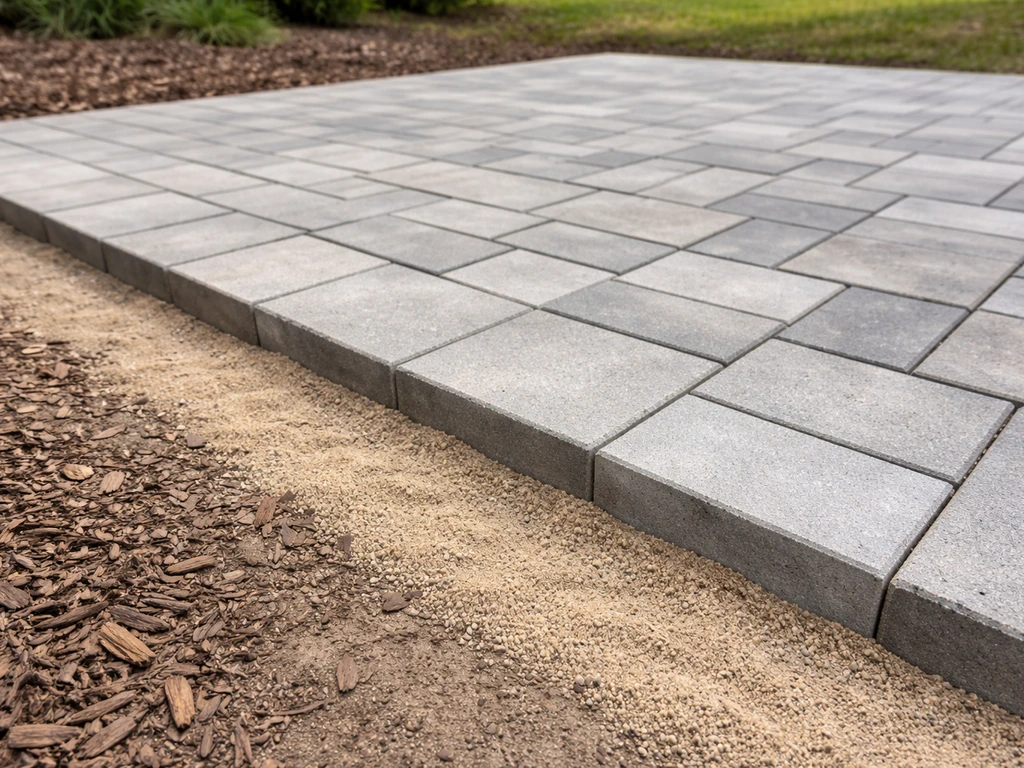
Measure your patio area first
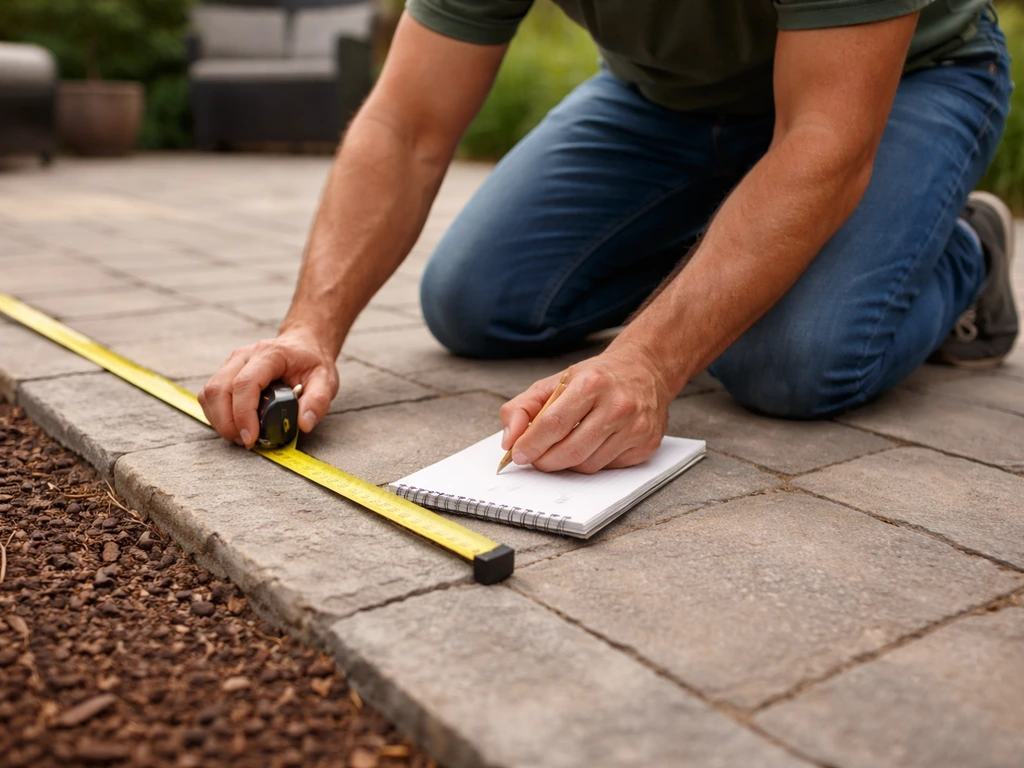
Everything starts with an accurate footprint. Grab a tape measure and write down your patio's length and width in feet. Multiply them together to get your square footage. A 12 x 14 ft patio is 168 sq ft. Simple enough, but a few situations trip people up.
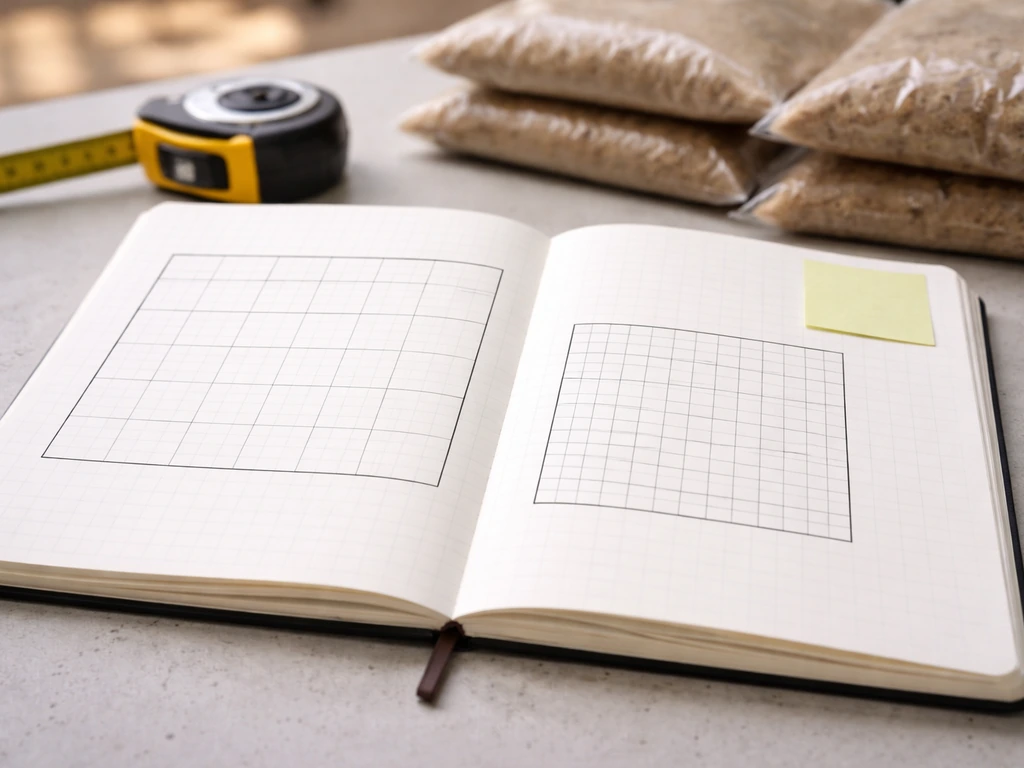
If your patio is an L-shape or has a cutout around a tree or raised bed, break it into rectangles, calculate each one separately, and add them together. Don't try to do it all in one mental step. For curved or freeform shapes, a reliable trick is to draw the shape on graph paper (each square representing 1 sq ft) and count the squares. It's not perfectly precise, but it gets you within a few percent, which is close enough for buying sand.
One quick note on units: work in feet and inches throughout. A lot of people accidentally mix feet and yards when they're looking at calculator tools online and end up massively over- or underestimating. There are 3 feet in a yard and 9 square feet in a square yard. If you accidentally calculate in square yards and buy bags sized for square feet, you'll either show up at the job site with nine times too much sand or nine times too little.
Which sand layer are you actually calculating?
This is where a lot of first-timers get confused, so let's clear it up right away. A typical paver patio has two completely different sand roles, and they require separate calculations.
Bedding sand (the one that matters most)
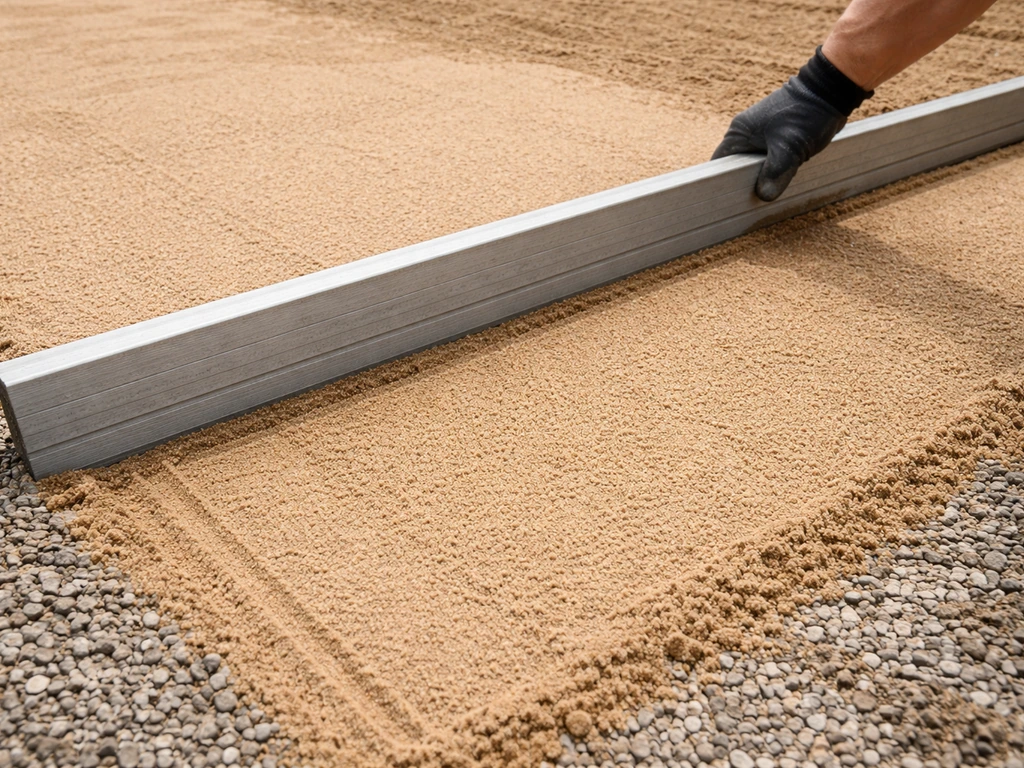
Bedding sand is the layer that sits directly under your pavers, on top of your compacted gravel base. This is where the bulk of your sand goes. The industry-standard thickness is 1 inch (25 mm). Knowing how to lay a small patio on soil also means planning the bedding sand thickness so the pavers stay level and stable 1 inch. Belgard, one of the leading paver manufacturers, explicitly specifies that bedding sand should be at least 1 inch deep and spread evenly across the base material. The Concrete Masonry and Hardscapes Association (CMHA) lists the nominal bedding layer as 1 inch, with a construction tolerance of plus or minus 3/8 inch. So target 1 inch. Don't go thinner thinking you'll save money. A bedding layer that's too thin leaves you with an uneven, unstable surface that rocks and settles.
Joint sand (the smaller, separate calculation)
Joint sand fills the gaps between pavers after they're laid. It's a much smaller volume but a separate purchase. Most people use polymeric sand for joints these days because it hardens and resists weeds and ants. The fill level should sit about 1/8 inch below the top of the pavers, not flush with the surface. A 50 lb bag of polymeric sand typically covers 60 to 120 sq ft for standard narrow joints, depending on the brand and joint width. For a 200 sq ft patio with narrow joints, plan on 2 to 3 bags. This article focuses primarily on bedding sand, but don't forget to add joint sand to your shopping list separately.
Sand over an existing concrete base
If you're laying pavers over an existing concrete slab rather than a fresh gravel base, you still use a 1-inch sand setting bed. McCarthy Stone’s paver installation guide’s excavation takeoff example also uses a 1-inch bedding-sand setting depth as part of determining how far down to excavate you still use a 1-inch sand setting bed. The process is essentially the same calculation. The difference is that you skip the gravel base layer and excavation depth math, but your bedding sand quantity stays the same.
Convert volume to weight and bags
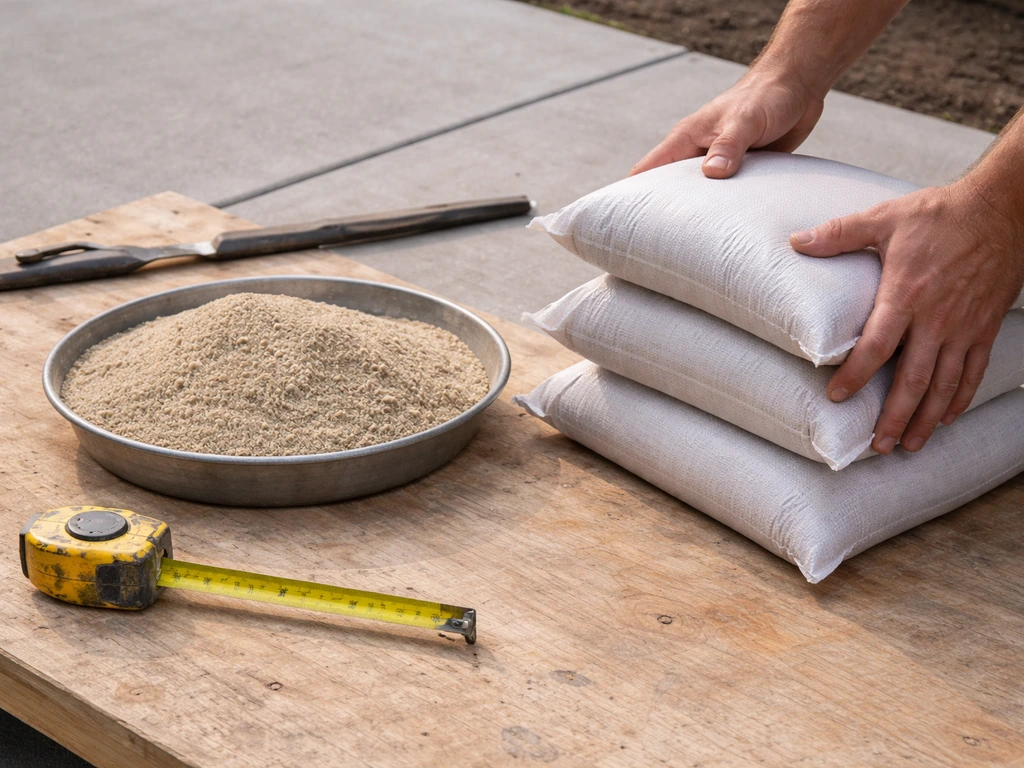
Once you have your square footage and you've settled on 1 inch of bedding sand, here's the step-by-step conversion to bags.
- Calculate cubic feet of sand needed: multiply your square footage by the depth in feet. Since 1 inch equals 1/12 of a foot, the formula is: Square Footage x (1 ÷ 12) = Cubic Feet
- Divide by 0.5 to get the number of 50 lb bags: A 50 lb bag of sand yields approximately 0.5 cubic feet. So: Cubic Feet ÷ 0.5 = Number of bags
- Or combine both steps: Square Footage ÷ 6 = Number of 50 lb bags needed (before waste)
That shortcut in step 3 works because (1/12) ÷ 0.5 = 1/6, so dividing your square footage by 6 gives you the bag count directly. Write that on a sticky note and take it to the hardware store.
If you're buying sand by the cubic yard (common when ordering bulk delivery for larger patios), note that there are 27 cubic feet in a cubic yard, so 1 cubic yard covers 324 sq ft at 1 inch depth. For anything over 200 sq ft, a bulk order often works out cheaper per cubic foot than bagged sand.
Sand needs for pavers vs. other patio surfaces
Concrete pavers and brick are the most common use case for a sand bedding layer, but other surfaces handle sand differently.
| Patio Surface | Bedding Sand Layer | Notes |
|---|---|---|
| Concrete pavers | 1 inch (25 mm) | Industry standard; most critical layer for levelness and stability |
| Brick pavers | 1 inch (25 mm) | Same spec as concrete pavers; washed concrete sand recommended |
| Porcelain/tile pavers | 1 inch (25 mm) dry or mortar bed | Some installs use a dry sand-cement mix instead of loose sand |
| Flagstone / irregular stone | 1-2 inches of sand or fine grit | Thicker layer sometimes needed to compensate for uneven stone backs |
| Poured concrete slab | None (sand subbase only if specified) | Sand is not used as a bedding layer under poured concrete patios |
| Gravel patio | None | No bedding sand; gravel IS the surface layer |
For porcelain slabs and planks, Belgard recommends a 1-inch bedding layer of washed concrete sand even in slab-on-concrete applications. If your tile or porcelain pavers are going over a concrete base with a dry mortar mudset instead, you're no longer working with loose sand and the calculation method changes entirely. That's a different install method. For the standard sand-bed paver install, stick with the 1-inch target.
Always add for waste, compaction, and uneven ground
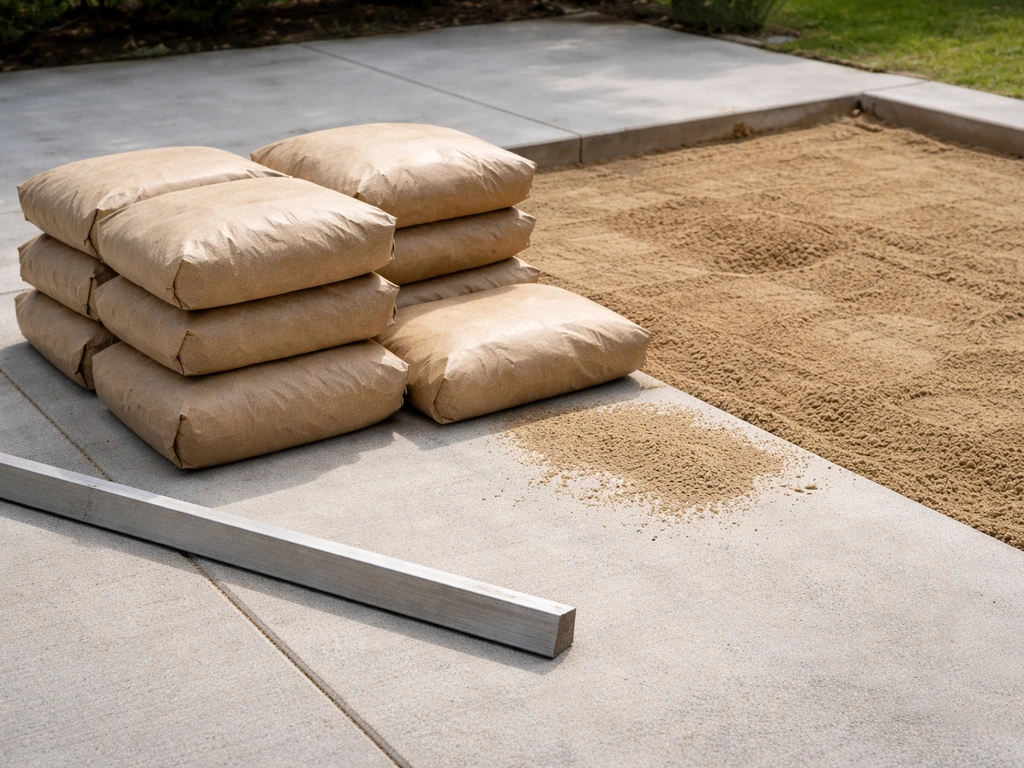
Never buy exactly the amount your calculation gives you. Sand compresses when weight is applied, spills off edges, and has to compensate for low spots in your gravel base. Here's how to think about each adjustment.
Compaction and settling
When you screed your sand bed and then lay pavers on top (especially after running a plate compactor), the sand compresses. You can lose around 10-15% of your screeded depth to compaction. That means if you lay 1 inch of loose sand and compact it, you might end up with closer to 7/8 inch. This is why the 10% waste buffer isn't just about dropped bags or trimmed edges. It's baked into the physics of the material.
Uneven subgrade and low spots
Even with a well-compacted gravel base, you'll have slight undulations across the surface. The sand layer has to fill those dips before it can be screeded flat. In practice, this means your average sand depth ends up being a bit more than 1 inch in some places. On a patchy or sloped subgrade, you might average 1.25 to 1.5 inches across the whole area. If your ground is noticeably uneven, bump your estimate up accordingly.
Waste factor by patio layout
A straight grid or running bond layout wastes less than a herringbone or diagonal pattern, but for sand (as opposed to pavers), layout pattern doesn't change much. The bigger variables are how clean your edges are and how much sand gets kicked around during installation. Use these waste factors:
- Standard rectangular patio, straight layout: add 10%
- Irregular shape, curves, or difficult access: add 15%
- Sloped or uneven subgrade: add 15-20%
- Large patio over 500 sq ft (bulk delivery): add 10% and round up to the nearest half-yard
The practical rule: take your base bag count, multiply by 1.10 to 1.15, and round up to the nearest whole bag. Don't round down. An extra bag of sand costs a couple of dollars and saves you a second trip to the store mid-project.
Step-by-step calculator workflow with real examples
Here's the full process laid out as a repeatable workflow you can apply to any patio size.
- Measure your patio: Length (ft) x Width (ft) = Square Footage
- Calculate base volume: Square Footage x (1 ÷ 12) = Cubic Feet of sand
- Calculate base bags: Cubic Feet ÷ 0.5 = Number of 50 lb bags (or just divide Square Footage by 6)
- Apply waste factor: Bags x 1.10 (standard) or x 1.15 (complex/sloped) = Final bag count
- Round up to the nearest whole bag
Example 1: Small backyard patio (10 x 12 ft)
Area: 10 x 12 = 120 sq ft. Base bags: 120 ÷ 6 = 20 bags. With 10% waste: 20 x 1.10 = 22 bags. Buy 22 bags of 50 lb bedding sand. Plus 2 bags of polymeric joint sand.
Example 2: Mid-size patio (14 x 20 ft)
Area: 14 x 20 = 280 sq ft. Base bags: 280 ÷ 6 = 46.7, round to 47 bags. With 10% waste: 47 x 1.10 = 51.7, round to 52 bags. Buy 52 bags. At this size, compare pricing on a bulk half-yard delivery (roughly 27 cubic feet = 54 bags equivalent) since it may be cheaper.
Example 3: Larger patio with uneven base (16 x 24 ft)
Area: 16 x 24 = 384 sq ft. Base bags: 384 ÷ 6 = 64 bags. Because the subgrade is uneven, apply 15% waste: 64 x 1.15 = 73.6, round to 74 bags. Alternatively, order 1.5 cubic yards of bulk sand (covers about 486 sq ft at 1 inch, giving you roughly 21% buffer, which is fine for a project like this).
Quick reference table for common patio sizes
| Patio Size | Square Feet | Base Bags (50 lb) | With 10% Waste | With 15% Waste |
|---|---|---|---|---|
| 8 x 10 ft | 80 sq ft | 14 bags | 15 bags | 16 bags |
| 10 x 12 ft | 120 sq ft | 20 bags | 22 bags | 23 bags |
| 12 x 16 ft | 192 sq ft | 32 bags | 35 bags | 37 bags |
| 14 x 20 ft | 280 sq ft | 47 bags | 52 bags | 54 bags |
| 16 x 24 ft | 384 sq ft | 64 bags | 70 bags | 74 bags |
| 20 x 30 ft | 600 sq ft | 100 bags | 110 bags | 115 bags |
Mistakes that get people into trouble
I've seen (and made) these errors enough times to know they're worth calling out directly.
Forgetting the bedding layer entirely
Some people think the sand is just for filling joints and buy only 2 or 3 bags for a large patio. The bedding layer is the big one. Joint sand is the small top-off at the end. Get your bedding sand sorted first.
Confusing square feet and square yards
This is one of the most common math errors. If you calculate 40 square yards and then use a formula designed for square feet, you'll be off by a factor of 9. Always double-check your units. Work in feet and inches from start to finish.
Using the wrong sand product
Bedding sand should be coarse, washed concrete sand (sometimes called paver base sand or torpedo sand). Play sand and mason sand are too fine and don't compact properly. They'll shift under load and cause pavers to rock. Check the product label before you buy.
Not accounting for slope and drainage
A patio should slope away from your house at about 1/8 inch per foot (roughly 1%) for drainage. If you're laying pavers on a slope, your sand layer depth varies slightly across the surface. This means you'll use a bit more sand than a perfectly flat calculation would suggest. For a patio on a noticeable slope, bump your waste factor to 15%. You can find more on how slope affects the whole installation process when looking at how to lay a patio on a slope. If you need help with the slope-specific setup, follow the guide on how to lay a patio on a slope.
Rounding bag counts down instead of up
If your calculation gives you 51.3 bags, buy 52. Never round down. Running out of sand mid-screed means either leaving your base exposed and unfinished while you make a store run, or screeding in two separate sessions, which can cause an inconsistent surface. A partial bag left over is not a problem.
Skipping the screed rails
This isn't a calculation mistake, but it wastes sand and leads to an uneven bed. Without screed rails (pipes or angle iron set at your target depth), you'll over-fill some areas and under-fill others, which burns through your sand budget and makes leveling much harder. The screeding process is worth understanding in detail before you start, and there's a full guide on how to screed sand for a patio that walks through the technique. If you want the exact technique for setting screed rails and leveling the bedding layer, see our guide on how to screed sand for patio.
Buying joint sand and bedding sand as the same product
They're different materials with different functions. Bedding sand is coarse and loose. Joint sand (especially polymeric) is fine-grained and often contains a binder that hardens when wet. Don't dump extra bedding sand into your joints expecting it to stabilize. Buy them separately and use each for its intended purpose.
Your next steps before you order
Before you head to the store or place a bulk delivery order, run through this checklist. It takes five minutes and saves real headaches on installation day.
- Measure your patio length and width (in feet) and write them down
- Calculate square footage and divide by 6 for your base bag count
- Add 10-15% waste and round up to the nearest whole bag
- Confirm you're buying coarse washed concrete sand or paver base sand, not play sand
- Add a separate line item for polymeric joint sand (roughly 1 bag per 60-100 sq ft depending on joint width)
- If your patio is over 200 sq ft, price out bulk sand delivery vs. bagged and compare cost per cubic foot
- Double-check that your gravel base is fully compacted before ordering, because your sand depth may shift slightly if the base settles
Once you've confirmed your numbers, the actual sand-laying process is very satisfying work. Getting the screeding right is the skill that ties everything together, and if you've never done it before, spending ten minutes practicing with your screed rails before committing to a section makes a noticeable difference in the finished result. For a full walkthrough of the paver installation process from start to finish, the guide on how to lay a patio with sand covers each stage in the right order.
FAQ
How do I calculate sand needed if my patio thickness isn’t exactly 1 inch?
Use the same method, but scale the depth. Convert your target depth to inches, then compute bag count using square footage × (depth/12) ÷ 0.5, or equivalently square footage × depth ÷ 6. If you also expect extra depth due to uneven ground, apply the waste after you adjust for the new thickness (for example 1.25 inches plus 10 to 15% total waste).
Do I need to account for compaction twice if I’m already adding 10 to 15% waste?
Usually no. The 10 to 15% buffer is meant to cover compression plus small variances like spills and low spots, so don’t stack another separate “compaction percent” on top unless your ground is very soft or you’re using a deep bedding bed. If you want extra confidence, choose the higher end of the range (closer to 15%).
What if my sand product coverage per bag is different from 0.5 cubic feet for a 50 lb bag?
Don’t assume the 0.5 value if the bag label lists a different coverage or volume. Use the label’s stated coverage (area per bag for a specific joint or setting depth), or use the volume conversion by plugging the correct cubic feet per bag into square footage × (depth/12) ÷ (cubic feet per bag).
How do I estimate joint sand if I don’t know my joint width?
Joint sand coverage depends heavily on joint width. Measure a few gaps after dry-fitting pavers, then use the manufacturer’s stated coverage range for your joint width (often listed as narrow joints vs wider joints). If you’re between sizes, plan closer to the lower coverage end for bedding savings, then still add 10% for spillage and incomplete filling
Should I calculate bedding sand based on the exact patio footprint or include steps, borders, and edging?
Include anything that sits on the sand bedding layer, such as border courses, raised edges, and built-in steps that use pavers. If a border is only decorative and not set in the sand bed, it may not require the same bedding volume. When in doubt, outline the paver area and footprint where pavers contact the sand bed, then calculate that area
What if my patio has a cutout shape, like around a tree, and the cutout isn’t a clean rectangle?
For irregular cutouts, use the graph paper method or count approximate square units, then subtract from the total. Do the subtraction in the same units (square feet), then apply the bag conversion once at the end so you do not introduce rounding errors multiple times
Can I use the same calculation for sand under steps or slopes?
For paver steps, treat the tread and riser areas separately if they are set with sand beds of different depths or if only part of the step uses the bedding layer. For slopes, the article’s 15% adjustment is a practical rule; if your slope is steep or there are low spots, consider increasing the waste further because the average sand depth can exceed 1.25 to 1.5 inches
If I’m ordering bulk sand by the cubic yard, how do I translate my bag count to yards?
Start from volume. Your bedding volume in cubic feet is square footage × (depth/12). Divide cubic feet by 27 to get cubic yards. As a quick cross-check, at 1 inch depth, 1 cubic yard covers about 324 square feet, so yards ≈ square footage ÷ 324
Do I need to include extra sand for messy edges or where sand washes out?
Yes, but treat it as a waste factor applied to the bedding calculation, not as a separate “extra depth” everywhere. If you have exposed/unfinished edges, poor compaction, or you expect runoff during installation, use the higher waste end (15%) and keep a reserve bag for late-stage top-offs
What’s the fastest way to avoid the most common math mistakes?
Use square feet for area, inches for depth, and the direct shortcut bag count. For standard 50 lb bags and 1 inch bedding, bags ≈ square feet ÷ 6, then multiply by 1.10 to 1.15 and round up. If you ever switch to cubic yards, stop and recompute from volume to avoid unit drift
How much sand should I buy if my patio is larger than 200 square feet and I’m doing a bulk delivery?
Even when bulk is cheaper, still verify how much bulk area coverage corresponds to your actual bedding depth and waste. If you’re using 1.0 inch as the target, you can start with cubic yards ≈ square feet ÷ 324, then add 10 to 15% yard buffer (or choose the higher end) before placing the order
What should I do if I end up with slightly less sand than calculated?
Don’t try to “make up” for a shortfall by laying thinner bedding, especially since too-thin sand can produce an unstable surface. Instead, pause before you run out, buy additional sand promptly, and try to avoid screeding in uneven sessions without re-screeding the whole section for consistency
Is there a difference in calculation if I’m using washed concrete sand versus play sand?
The math changes only if you change the target thickness or depth, not the material. However, washed concrete sand compacts as expected, while finer play sand can shift, which can effectively increase settling later. Stick with the correct sand type so your calculated volume results in the intended final thickness
Do I need to calculate sand depth differently if the subgrade is already level but not firm?
If the ground is level but soft, the depth math stays the same, but you should increase waste because compaction may “eat” more of the bedding bed than usual. In practice, move from 10% toward 15% if you suspect the subgrade will compress under traffic or plate compaction